
Navigating the Differences Between Pens and Syringes for Semaglutide
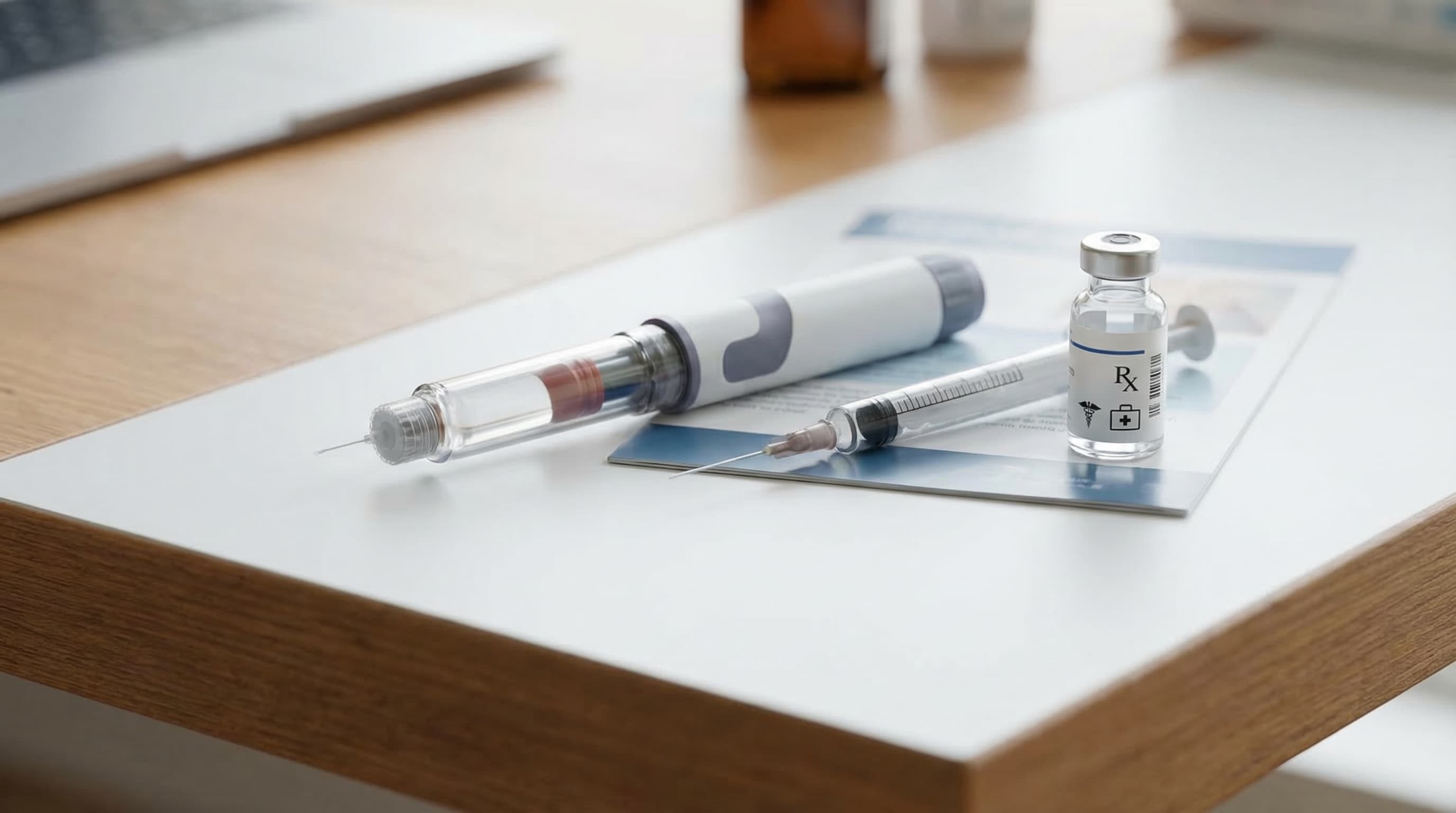
Medical weight loss and diabetes care have improved with a group of medications called GLP-1 receptor agonists. Drugs like semaglutide work like a natural hormone to control blood sugar, slow digestion, and help you feel full for longer.
Semaglutide is the main ingredient in well-known medications like Ozempic, which is approved for type 2 diabetes, and Wegovy, which is approved for weight loss. These drugs are usually given as weekly injections just under the skin, often in the stomach, thigh, or upper arm.
As more people use semaglutide and similar GLP-1 medications like tirzepatide (Mounjaro and Zepbound), many need to learn how to give themselves these injections. The two main ways to take these medicines are with pre-filled pens or with syringes and vials. Understanding the differences can help you and your doctor choose what works best for you.
Understanding the Basics of Subcutaneous Injections
Whether you use a pen or a syringe, semaglutide and other GLP-1 medications are injected just under the skin. The needle is short and thin, so most people find it is not very painful. With a little training from a healthcare provider, you or a caregiver can learn to give these injections at home. Common injection sites include the stomach, thigh, or upper arm—and the effects of the medication are the same no matter which method you use. You might notice mild redness or irritation at the site with either option, but the way you prepare and give the shot is different.
The Pre-Filled Weight Loss Pen: Single-Use vs. Multi-Dose
Brand-name semaglutide medications usually come in pre-filled auto-injector pens. These pens are made to be easy to use, convenient, and to help reduce patient anxiety. There are two main types of pens: single-use and multi-dose.
Single-Use Pens
Single-use pens are the simplest way to take these medications. Brand-name drugs such as Wegovy and Zepbound usually come in this form.
A single-use pen comes pre-filled with one dose of medicine. The needle is already attached and hidden inside. To use it, clean your skin, uncap the pen, press it against your injection site, and let the device deliver the medicine. You will usually hear a click when it starts and another when it is done, or see a colored bar stop moving to show the dose is finished.
The main advantage of a single-use pen is that it is very easy to use. You do not need to handle needles, attach anything, or set a specific dose, which almost eliminates the risk of dosing errors. After the injection, you simply throw the whole pen away in a sharps container. For people who are very afraid of needles, the hidden needle design can be the most comfortable choice.
Multi-Dose Pens
Medications like Ozempic come in multi-dose pens. These pens hold several doses in one device.
Using a multi-dose pen requires slightly more involvement. Before each injection, you must attach a fresh, sterile needle to the pen. Then, you turn a dial at the end of the pen to select your prescribed dose (for example, starting at 0.25 mg and increasing to higher maintenance doses, such as 1.0 mg or 2.0 mg, for Ozempic). After dialing the dose, you insert the needle into your skin and press the button to inject, holding it for a few seconds to ensure the full dose is delivered. After the injection, remove and dispose of the needle, then cap the pen to store it for your next dose.
Although multi-dose pens require handling a needle and choosing a dose, they are still easy to use. The dial is accurate, so mistakes are rare if you follow your provider's instructions. Because of recent shortages, many patients have started using compounded versions of semaglutide or tirzepatide. Some companies also offer single-dose vials instead of pens. In these cases, the medicine comes in a small glass vial, and patients use traditional syringes for their weekly doses.
How to Use a Syringe and Vial
Using a syringe takes a bit more preparation. First, clean the top of the vial. Next, uncap the syringe, pull back the plunger to draw in air equal to your dose, and inject that air into the vial. With the needle still in, turn the vial upside down and slowly pull the plunger to draw out the right amount of medicine. If you see air bubbles, gently tap the syringe and push the plunger a little to clear them before removing the needle.
Once the syringe is filled, pinch a section of skin at your injection site, insert the needle, and push the plunger all the way down to give yourself the medicine.
Pros and Cons of Syringes
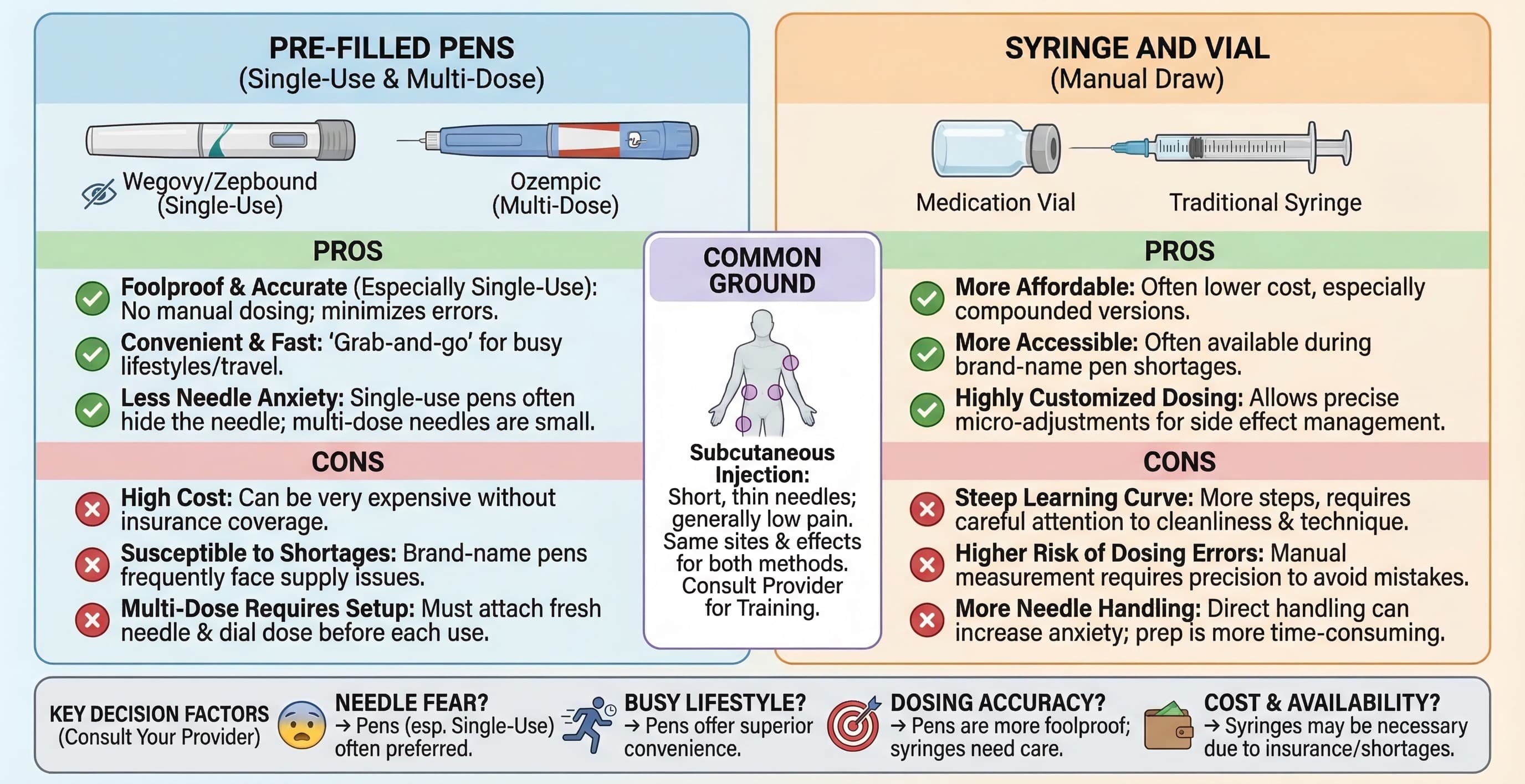
The main drawback of the syringe-and-vial method is that it takes more practice to learn. There are more steps, you need to be careful about cleanliness, and you have to measure the liquid exactly to get the right dose. Since you measure by hand, there is a higher chance of mistakes than with pre-filled pens. However, syringes are often easier to get than brand-name pens, especially during shortages. They also allow for very precise dosing. If you are sensitive to side effects like nausea, vomiting, or stomach discomfort, your provider can show you how to draw a specific, small dose that a pre-filled pen cannot provide.
Making the Choice: Pen vs. Syringe
When choosing between a weight loss pen and a traditional syringe, consider a few key factors:
Fear of Needles: If you are anxious about needles, single-use auto-injector pens (like Wegovy) are likely the best choice. The needle stays hidden, and you never have to touch it. Multi-dose pens (like Ozempic) are also a good option because the needles are very small and easy to attach. Pens are also faster and easier to prepare. If you travel often or have a busy lifestyle, the convenience of a pre-filled pen can be very helpful.
Dosing Accuracy: Auto-injector pens are the most accurate, and dial-a-dose pens are also very reliable. Syringes require you to measure by hand, so you need to be extra careful to avoid mistakes.
Cost and Availability: In many cases, your choice will depend on insurance coverage and whether the medication is available. Brand-name GLP-1 pens can cost about $1,000 a month without insurance. Because of high costs and shortages, many patients use compounded semaglutide from reputable pharmacies, which comes in vials and requires syringes. Sometimes, the manufacturer also provides vials directly, such as Zepbound's single-dose vials.
Conclusion
Whether you use an auto-injector pen, a multi-dose pen, or a traditional syringe and vial, semaglutide and other GLP-1 medications are changing how people manage weight and metabolic health. Pre-filled pens are the most convenient and easy to use, while syringes can be a more affordable and flexible option.
No matter which method you choose, it is important to work with a qualified healthcare provider. They can help you choose the right medication and delivery system for your health and budget, and make sure you know how to give yourself the injections safely. With some practice, both pens and syringes can become a simple and almost painless part of your weekly routine as you work toward better health.
Ready for your next step?
Compare options and connect with a licensed partner when you're ready.
Find My Match